Nov 3, 2026 · Company News
Inside Our Qingdao Workshop: How Carbon and Stainless Pipe Nipples Are Made
A walk through the Qingdao shop floor where carbon and stainless pipe nipples are cut, threaded to NPT or BSP, finished black, galvanized or passivated, then gauged and packed — and why keeping every step under one roof matters for repeat orders.
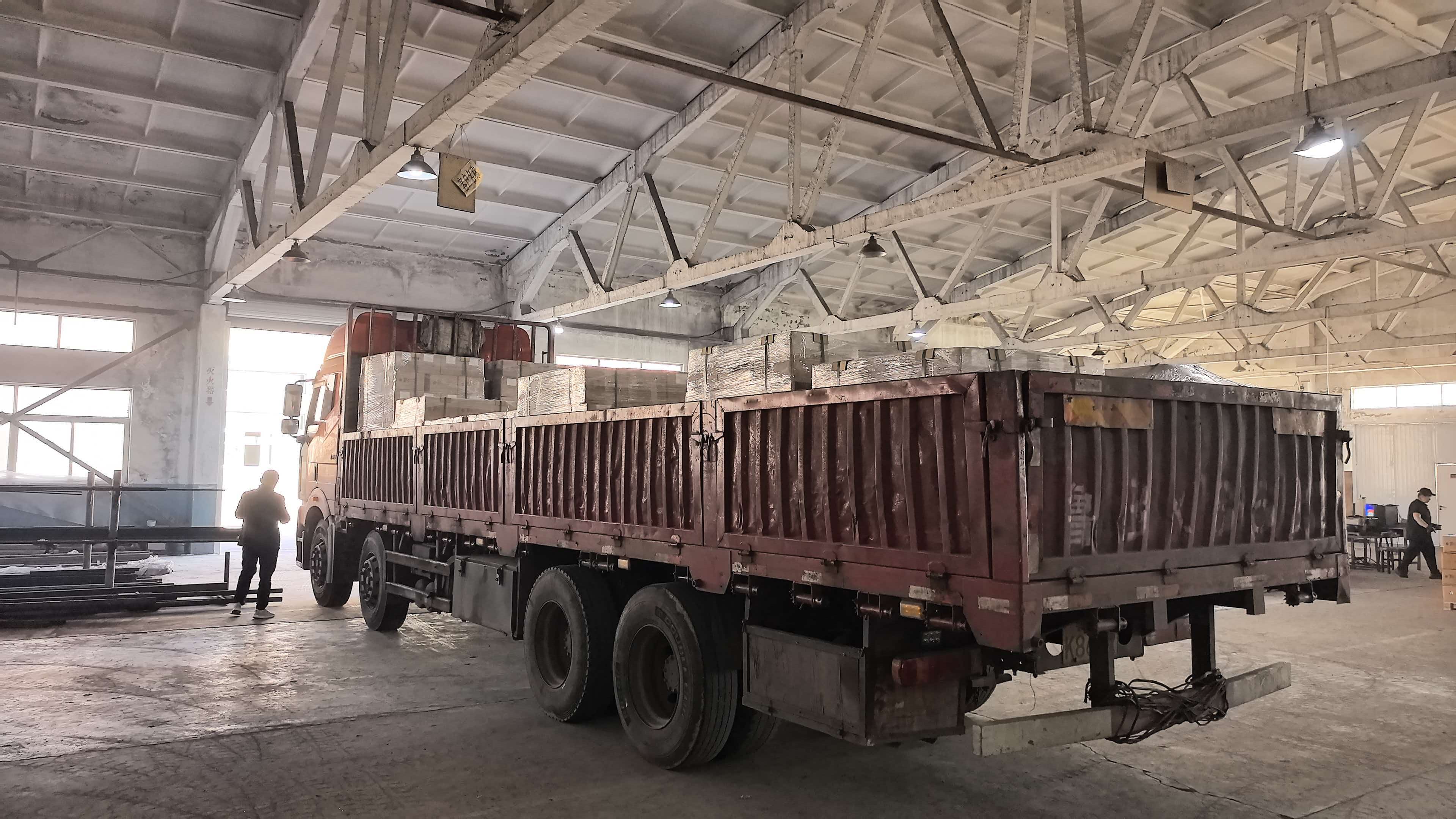
On a winter morning in Qingdao, the workshop is running before the office lights come on. The air outside is cold and damp off the bay, which is why incoming steel is stored under cover and checked for surface condition before anything is cut. On the rack: a stack of SCH40 carbon steel pipe and a smaller bundle of stainless. Both will become pipe nipples today — one for a European plumbing distributor, another for an American OEM building skid-mounted fluid systems. What a visitor notices is the short distance the material travels: cutting, threading, deburring, finishing, inspection and packing all happen under one roof. A piece of pipe never leaves the building between operations, and when a thread is wrong, the person who finds it can walk twenty meters and talk to the person who made it.
Cutting to Length
Every nipple starts as pipe cut to a fixed length, taken from the customer drawing or from the standard dimension for the nipple type — close, short, long, or a special length called out on the order. The saw is set once, the first piece is measured with a rule and a caliper, and the setting is rechecked through the run so tool wear does not quietly move the last piece out of tolerance.
Cut quality is not a formality. A cut that is not square to the pipe axis pushes the thread off center, and an off-center thread will leak no matter how carefully it is taped on site. The cut face is squared and the burr is removed before the piece moves on. On stainless, feed and speed are held down to limit cutting heat, which would otherwise leave a tinted, chromium-depleted zone for the pickling step to remove.
Threading to NPT or BSP
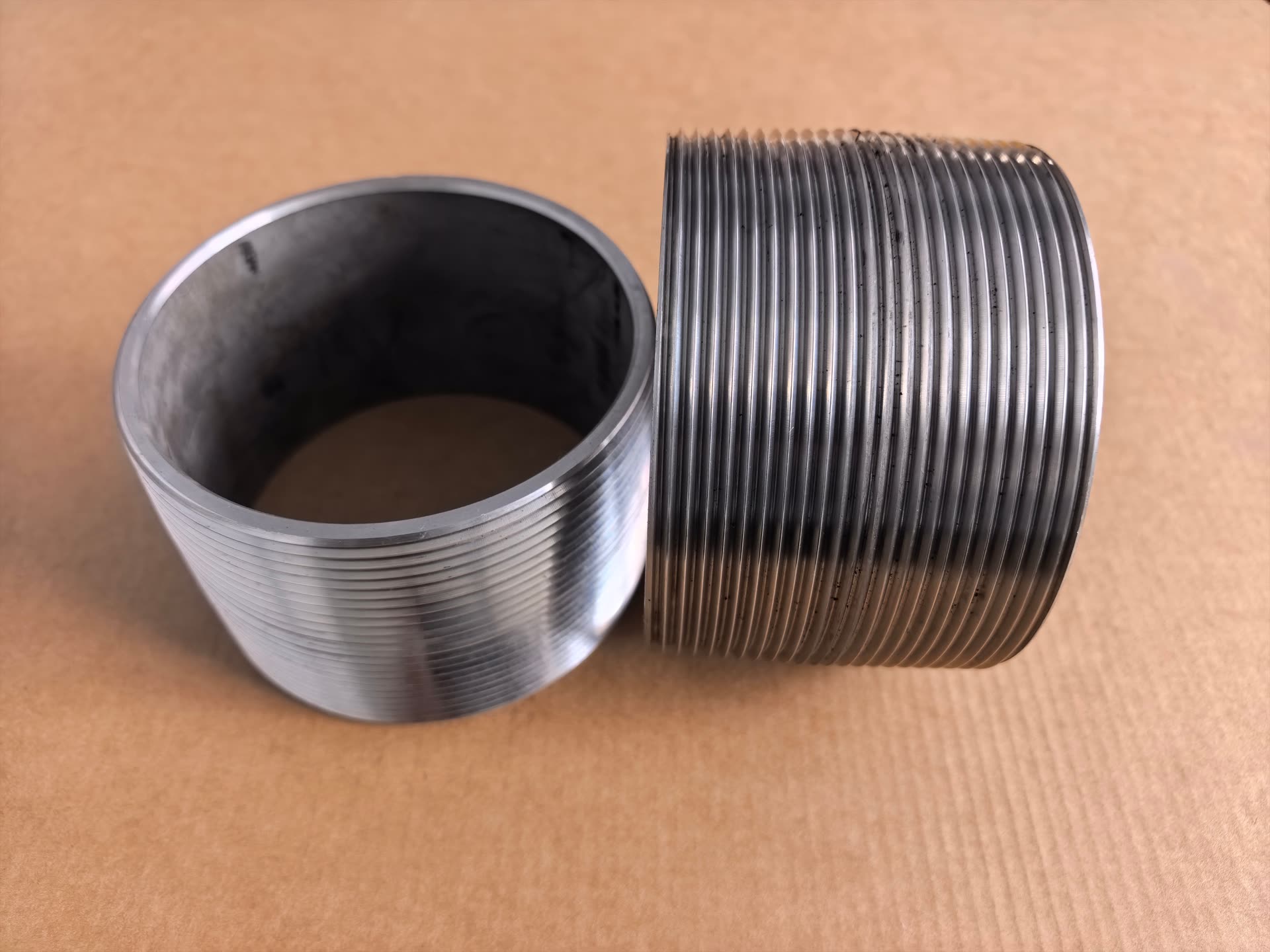
Threading is where the two main thread families must be kept strictly apart. NPT follows ASME B1.20.1: a 60-degree form with a 1:16 taper, sealed by interference as the joint is tightened. BSP splits into ISO 228 parallel thread, usually sealed with a gasket or O-ring, and ISO 7 tapered thread, which seals on the thread itself. They look similar and are not interchangeable, so the shop treats them as separate setups — separate tooling, gauges and labeled bins at the machine.
Pieces are threaded on CNC lathes for volume work and on die heads for short runs and odd sizes. Thread length and chamfer are checked against the drawing, and the first piece of every setup is gauged before the run continues. Mid-run, operators check external threads with go/no-go ring gauges and internal threads with plug gauges, and a worn chaser is replaced before it produces a thread that gauges but will not seal.

Finishing: Black, Galvanized or Passivated
After deburring, the finish depends on material and service. Carbon steel nipples are usually supplied black, with a protective oil or thin black coating that holds rust off through shipment and short-term storage, or hot-dip galvanized where the joint sees weather or wet service. Galvanizing applies zinc after the threads are cut, so galvanized nipples are tapped or chased afterward: the zinc inside the thread has to be cleared or the fitting will not run on by hand.
Stainless needs no coating but does need its surface restored. Machining leaves free iron behind, and free iron is what starts pitting in a chloride environment. Passivation removes that contamination so the chromium oxide layer can rebuild. Heavy heat tint from threading is pickled first; light tint is passivated directly. Parts are rinsed and dried before they reach the packing bench.
Checking Before Packing
Final inspection is dimensional and visual, and it happens before anything is boxed. Threads are gauged again, overall and thread length are checked, and each part is examined under good light for tool marks, laps, rust bloom and coating defects. Galvanized parts are checked for bare spots and for zinc bridged into the threads; stainless parts for residual tint and handling marks. Anything that fails goes back to the station that caused it — easier here than in a shop that outsources its finishing.
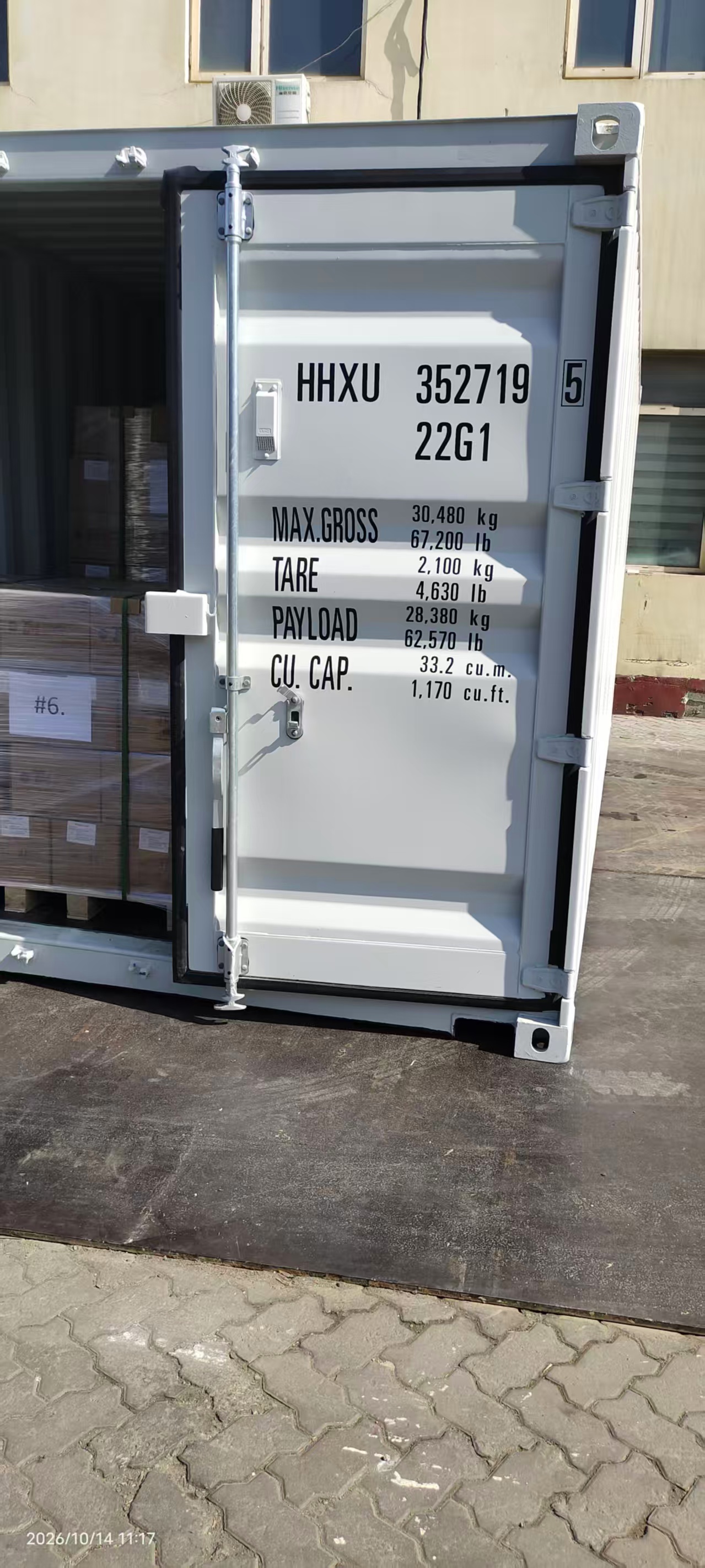
Packing is built around a container crossing an ocean. Threads get plastic caps so a dinged crest does not become a leak on site, nipples are bundled by size and thread type, and bundles are labeled with the item, thread standard and lot reference so a carton traces back to the run that produced it. Cartons are lined and palletized for stability.
None of this is unusual on its own. What has changed since 2003 is how tightly the steps are held together — the same team cutting, threading and finishing nipples and fittings in Qingdao for more than two decades, for building water supply and drainage, industrial piping and fluid transfer, under NPT and BSP, for customers in Europe and North America. That continuity is the real process control: the people who made the first shipment are still a short walk from the people making the next one, which is also where OEM and ODM work begins — a drawing, a thread standard, a finish, and one building that can hold all three.